Sleep education · Mattress materials
What to Examine in a Naturepedic Organic Mattress
An “organic” label can be a helpful starting point, but it is not a complete description of what you’ll sleep on. To compare Naturepedic mattresses—or any organic mattress—look closely at the materials, layer construction, feel, certifications, care requirements, and the support your body needs.
Shopping for a mattress is personal: one sleeper’s dreamy, cloudlike surface may feel too soft to someone else, and a material that sounds reassuring on a label may not answer the questions you actually have. What is in the comfort layer? How does the mattress keep its shape? Which parts are certified, and by whom? Does the model suit your preferred sleep position?
Naturepedic offers a useful lens for asking those questions. The brand is associated with organic mattress construction, but its name alone cannot tell you the exact materials or design of every model. Product lines and specifications may differ, so the most reliable approach is to examine the information for the particular mattress you are considering. Think of this as a friendly label-reading guide—not a verdict on one brand or a promise that any single material guarantees better sleep.
The short version: Compare complete material lists, identify what each layer does, verify certification scope, and consider comfort and support separately. Then check the foundation, care instructions, trial terms, and warranty before making a decision.
Start by asking what “organic” describes
Organic is meaningful only when you know which material it refers to and what standard is being used. A mattress is a layered product: it may include a fabric cover, batting, a comfort layer, a support core, adhesives or other joining methods, and a fire barrier. A claim about one component does not automatically describe every other component.
Look for an itemized materials list rather than relying on a broad phrase such as “made with organic materials.” Does the description identify the cover fabric, the filling or batting, the core, and the fire barrier? Does it distinguish certified organic material from material described as natural? If a component is not explained, that is a reasonable point to investigate further.
Also pay attention to wording. “Organic cotton cover,” “organic latex,” and “made with organic materials” are different levels of detail. A clear product page should help you understand what is certified, what is not, and whether a claim applies to the finished mattress or only to a specific ingredient.
Read the mattress from the cover inward
A useful way to make sense of construction is to follow the mattress from its outer surface toward its center. Each layer has a role, and the way the layers work together influences the feel you notice when you lie down.
The cover and surface materials
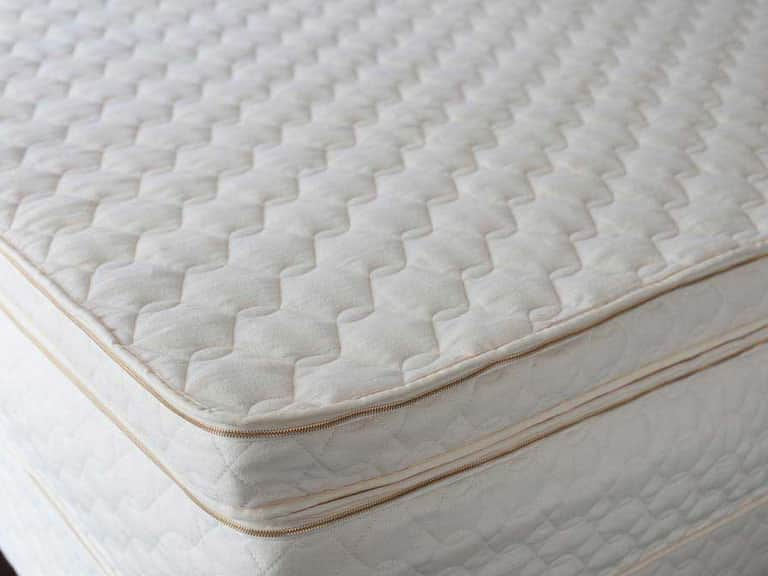
The cover is the part you encounter first, but it is not necessarily removable or washable. Check what it is made of, whether it is quilted with batting, and whether the manufacturer permits removal. A cover that is sewn or zippered in place may have different care needs from one designed to come off. Never assume a zippered cover is machine washable: the care label and manufacturer instructions are the deciding guides.
Surface quilting can add a little cushioning and alter the first impression of firmness. It does not, by itself, tell you how supportive the mattress will feel after your body settles into the deeper layers. Ask whether the quilting contains additional fibers or foam, and whether those materials appear in the product’s full component description.
Comfort layers and cushioning
Above the support core, many mattresses use one or more comfort layers to cushion pressure points and shape the surface feel. Materials may include latex, wool, cotton, or other fibers, depending on the model. Their thickness and placement matter: a thin layer can create a different sensation from a deep comfort system, even when the same material is used.
Consider what “comfort” means for you. Side sleepers often pay attention to pressure at the shoulder and hip. Back sleepers may want a surface that cushions without allowing the midsection to sink excessively. Stomach sleepers commonly prefer a more stable feel that helps avoid pronounced sagging through the torso. These are useful starting points, not rigid rules; body shape, preferences, and pain history can change what feels right.
The support core
The support core is the mattress’s deeper structure. Depending on the design, it may use a solid material, a layered construction, or another support system. Check how the manufacturer describes it and whether the mattress has distinct zones or firmness choices. If the product description names materials without explaining their arrangement, ask for a layer diagram or a written breakdown.
Construction details can also affect how the bed responds when a partner moves, how stable the edges feel, and whether the mattress works with an adjustable base. Do not infer those features from the word “organic.” Look for model-specific information and confirm compatibility with the manufacturer.
Understand certifications—and their boundaries
Certifications can help shoppers evaluate specific claims, but they are not interchangeable and do not all assess the same things. Some standards focus on organic fiber or agricultural sourcing; others address emissions, chemical content, or processing requirements. The key is to identify the certifier, the exact standard, and the product or component covered.
When a mattress listing displays a certification, follow the details rather than stopping at the logo. Does the certification apply to the cotton fabric, the latex, a textile component, or the finished product? Is the certificate current? Can you find the product or supplier in the certifier’s directory? If the claim is important to your decision, ask the manufacturer to clarify its scope in writing.
It is equally important not to treat a certification as a universal safety guarantee or a medical claim. Certifications can provide structured information about defined criteria. They do not predict whether you will find a mattress comfortable, diagnose sensitivities, or guarantee improved sleep. They should sit alongside material transparency, care information, and your own comfort assessment.
For broad background, consult the certification organization’s own explanation of its standard rather than relying only on a retailer’s summary. That extra step can turn a reassuring-sounding label into a more useful piece of evidence.
Match feel and support to your sleep habits
“Firm” and “soft” are shorthand, not universal measurements. There is no single firmness scale that every manufacturer applies in exactly the same way, and two mattresses described with the same label can feel quite different. Your body weight, proportions, sleeping position, and personal preference all influence how a surface feels.
When comparing models, separate the initial sensation from support over the night. A mattress may feel plush at first yet still provide a stable foundation; another may feel firm on contact but not cushion your shoulder enough when you sleep on your side. If possible, lie in your usual position for several minutes, and consider whether the surface keeps your spine in a comfortable, neutral position rather than focusing on the label alone.
For couples, compare preferences openly. If one person wants a noticeably softer surface than the other, ask whether the particular model offers different comfort choices on each side. Do not assume that this option exists across a brand’s full range. Confirm sizing, construction, and any adjustment process for the exact mattress.
Existing discomfort deserves careful thought, but a mattress is not a treatment. If pain is persistent, severe, or worsening, speak with a qualified health professional rather than expecting a mattress change to resolve it.
Consider heat, moisture, and bedroom conditions
People often describe a mattress as “cooling,” but temperature comfort depends on more than the core material. The mattress cover, quilted layers, sheets, room temperature, humidity, pajamas, and bedding all contribute to the sleep environment. A material’s breathability or moisture-handling characteristics may be worth comparing, but neither should be treated as a guarantee that every sleeper will feel cool.
Ask what the manufacturer means by temperature regulation. Is the statement tied to a named material or a tested feature, or is it general descriptive language? If you tend to sleep warm, check the full bedding setup as well as the mattress. Lightweight, breathable sheets and a room environment that suits you may matter alongside mattress construction.
Check care, setup, and the base underneath
A mattress is part of a sleep system, not a stand-alone object. Before purchase, verify the required foundation or bed frame, including any spacing limits for slats and support requirements. An unsuitable base may affect performance or warranty coverage. If you plan to use an adjustable base, confirm that the exact model is compatible.
Care instructions deserve the same attention as materials. Find out whether the mattress should be rotated, whether it should ever be flipped, and how to handle spills. A one-sided design is not meant to be turned over simply because older mattresses were sometimes reversible. Follow the instructions for the specific product.
It is also sensible to ask about delivery, setup, old-mattress removal, and access to your bedroom. Organic materials do not make a mattress easier to maneuver up a narrow stairwell, and delivery arrangements vary. Clear answers before checkout can prevent an avoidable surprise on arrival day.
Read trial periods and warranties closely
A trial period can give you time to learn how a mattress feels at home, but the details matter. Check when the trial begins, whether a minimum break-in period applies, how returns are arranged, and whether pickup or other fees may apply. If the mattress is customized, or bought through a retailer rather than directly from the manufacturer, the terms may differ.
Warranties are separate from comfort trials. A warranty generally addresses specified defects under stated conditions; it is not a promise that the mattress will feel perfect or retain its original feel indefinitely. Read what counts as a covered defect, what exclusions apply, and whether the approved foundation and care routine are conditions of coverage. Keep receipts and product information in a place you can find later.
Because policies and model specifications can change, verify all current details with the manufacturer or seller before committing. A saved product page or written response can be useful if you need to revisit a claim later.
A practical checklist for comparing Naturepedic models
Before choosing a model, collect answers to these questions. The goal is not to find the mattress with the longest list of claims; it is to understand the one you are considering well enough to decide whether it fits your needs.
- Materials: Is every major layer identified, including the cover, comfort materials, core, and fire barrier?
- Claims: Which components are described as organic, and which are described as natural or something else?
- Certifications: What standard is named, who issued it, and what exact component or finished product does it cover?
- Construction: How are the layers arranged, and what is the mattress’s total height?
- Comfort: What firmness choices are available, and do they suit your preferred sleeping position and feel?
- Partners: Can the sides be configured differently, if that matters for your household?
- Fit: Does the mattress work with your bed frame, foundation, or adjustable base?
- Care: Can the cover be removed? What cleaning, rotation, or protection does the manufacturer recommend?
- Policies: What are the current trial, return, delivery, and warranty terms?
If a specification is missing, asking a direct question is part of responsible shopping. A useful answer should be specific enough to compare—not just a repeated marketing phrase.
Questions worth asking before you buy
When details are unclear, keep your questions focused. For example: “Which layers in this model are certified organic?” “What is the fire barrier made from?” “Does the certification apply to the finished mattress or only to a component?” “Can the cover be removed, and what cleaning method is allowed?” “What type of base is required?”
You can also ask how the feel is expected to suit different sleep positions, whether firmness choices are available, and what happens if the mattress feels wrong during the trial period. These questions are not signs of being difficult. A mattress is a substantial purchase, and transparent answers help you compare like with like.
When comparing multiple Naturepedic models, write down the answers in a simple table or notes app. Brand families can include different constructions and options, and it is easy to mix up details while browsing. Use the model name and size in your notes so you can match each answer to the right product.
The bottom line
Naturepedic can be a useful starting point for examining what an organic mattress claim means in practice. The most helpful comparison is not a contest over the word “organic”; it is a close look at the specific mattress’s material transparency, layer design, certification scope, comfort choices, and real-world requirements.
Read from the cover inward. Confirm which components are certified. Think about how you sleep, the feel you prefer, the bed base you own, and the care you are prepared to provide. Then read the trial and warranty terms before purchasing. With those details in view, you can make a more informed choice—and focus less on a label and more on whether the mattress is a sensible fit for your bedroom and your nightly routine.